
Insights on Leadership and Personal Growth
Dive into thoughtful reflections and practical advice from an educator and mentor dedicated to empowering youth and fostering meaningful social impact.
3/27/20262 min read
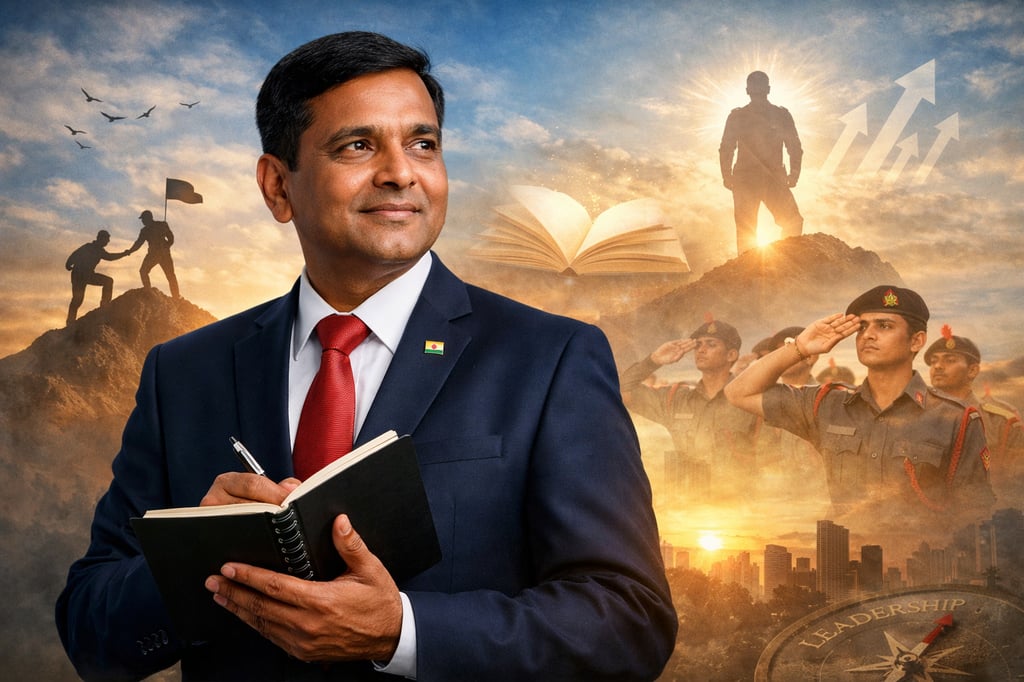

Leadership and Personal Growth: A Journey of Discipline and Purpose
Leadership is often seen as a position of authority, but in reality, it is a journey of personal growth, discipline, and responsibility. True leadership begins within an individual and develops through experiences, challenges, and continuous learning. Over the years, through my work as an educator, mentor, and NCC officer, I have realized that leadership is not simply about guiding others — it is about constantly improving oneself.
Leadership Begins with Self-Discipline
One of the most important foundations of leadership is discipline. Discipline shapes our habits, strengthens our character, and helps us stay focused on our goals. In environments such as education, the armed forces, and leadership training, discipline creates the structure that allows individuals to grow and perform at their best.
Self-discipline teaches us to remain consistent even when motivation fades. Leaders who practice discipline are able to make better decisions, manage responsibilities effectively, and inspire confidence in others.
Personal Growth is the Foundation of Leadership
Leadership cannot exist without personal growth. A leader must constantly strive to improve their knowledge, mindset, and emotional awareness. Growth comes from learning, reflecting on experiences, and being open to new ideas.
In my experience mentoring students and cadets, I have seen that individuals who commit themselves to learning and self-improvement naturally develop leadership qualities. They become more confident, resilient, and capable of handling challenges.
The Role of Education in Developing Leaders
Education plays a vital role in shaping future leaders. It does more than provide knowledge; it develops critical thinking, responsibility, and the ability to work collaboratively with others.
Teachers and mentors have a unique opportunity to influence young minds. By encouraging curiosity, discipline, and a growth mindset, educators can help students develop the qualities that define strong leaders.
Leadership Through Service
True leadership is not about power or recognition. It is about service. Leaders must focus on helping others grow, succeed, and realize their potential.
When leadership is guided by service, it creates trust and respect. This principle is deeply rooted in institutions like the National Cadet Corps, where leadership is built on teamwork, responsibility, and dedication to a larger purpose.
The Continuous Journey
Leadership and personal growth are not destinations; they are continuous journeys. Every experience, challenge, and opportunity contributes to shaping a better version of ourselves.
By committing ourselves to discipline, learning, and service, we can develop the qualities needed to lead with integrity and purpose.
The world needs leaders who are not only knowledgeable but also compassionate, responsible, and committed to making a positive impact.